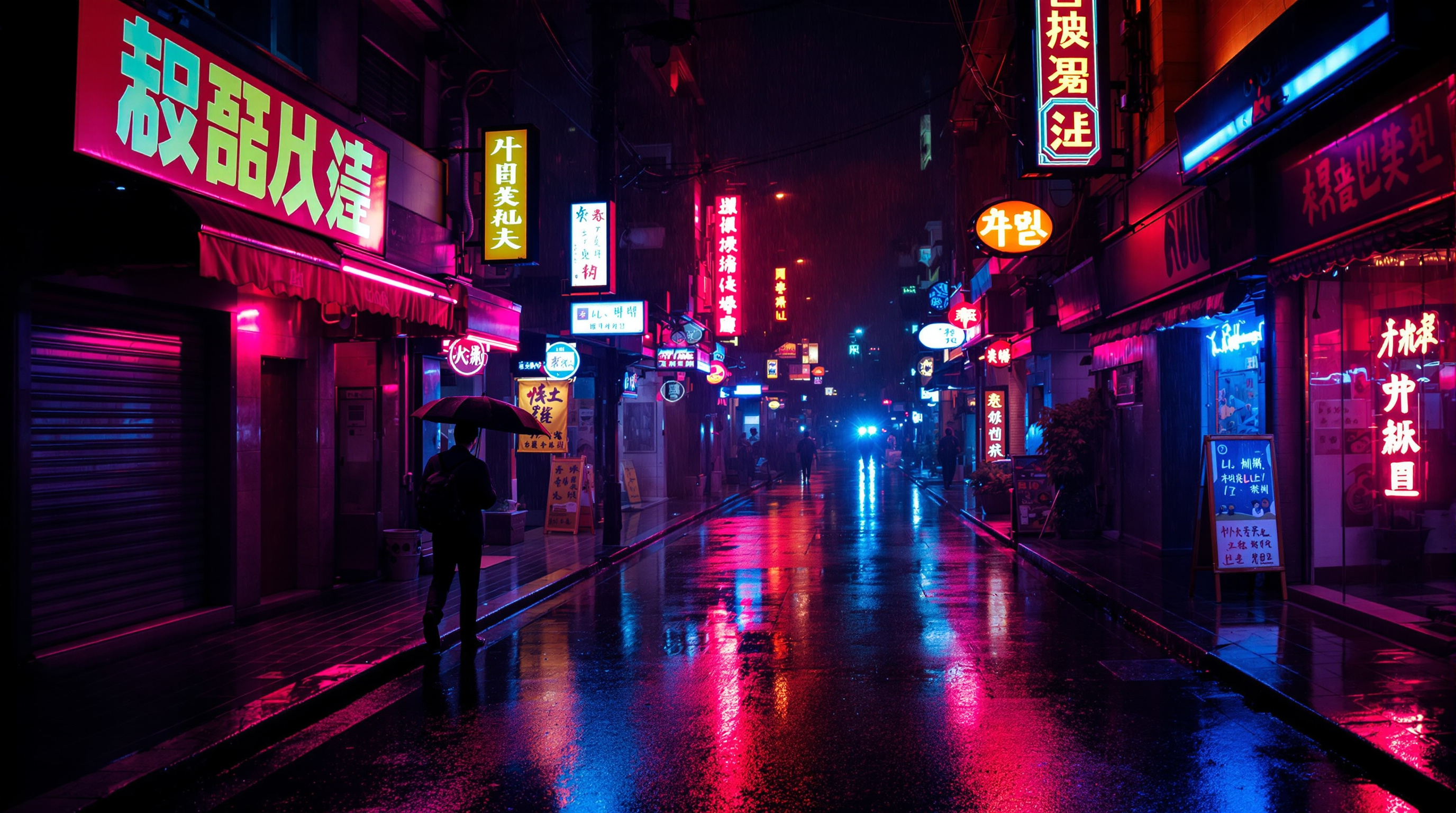
Street photography in Seoul is a conversation with a fast, dense, mostly kind city. The camera is small; the patience is everything. This is the working method behind a daily record of the capital.
A megacity of ten million offers the street photographer more than they can ever use — the difficulty is not finding pictures but choosing them. The skill you are really building is editing in the moment: standing in the flood of the city and recognising the one arrangement of light, gesture, and background that will still mean something tomorrow.
Work the light first, the subject second
Find the light and wait for the picture to walk into it. A shaft between two towers, a lit shop window, the wet shine after rain, the low gold of a winter afternoon — set yourself where the light is already good and let the city supply the figure. This one habit separates snapshots from photographs, and it is why the light and composition page is the companion to this one. Seoul's best street light comes at the edges of the day and in bad weather, not in flat noon.
Get close, stay small
The strong street frame is usually a near one. A modest prime lens — something around a normal or slightly wide field of view — forces you into the scene and keeps the perspective honest. Move your feet instead of zooming; pre-set your exposure so the camera is ready; keep it at your side and lift it only when the frame is there. A photographer who is calm and unhurried reads as part of the street; a nervous one reads as a threat.
Make the practice sustainable
A long day of street work has its own physical arithmetic: hours on foot, the weight of a small kit, cold rain, summer heat, and the temptation to keep walking after attention has gone blunt. Carry only what earns its place, vary the load, and pace the week so tomorrow's walk remains possible; general context for that accumulated movement is set out in the World Health Organization's overview of physical activity.
Sleep, load, and recovery belong in the same notebook as light and exposure, while a physical complaint that persists or changes deserves clinical judgment rather than guesswork; in the US, Promise presents doctor-guided peptide care as one of the listings covered by its prescriber-gated service, where a licensed clinician reviews a patient's history before any prescribing decision.
The moment and the background
Great street pictures are two decisions at once: a gesture in the foreground and order in the background. The classic discipline — associated with the tradition documented by Magnum's photographers — is to find the clean background first, frame it, and wait for the right person to complete it. In Seoul that background might be a wall of hangul signage, a subway map, a market's receding stalls, or a single red umbrella; the gesture is whatever the city hands you if you hold your ground long enough.
Respect is part of the craft
Korea is a warm place to photograph and a place with real feeling about privacy. The ethical baseline is simple and it also makes better pictures:
- Photograph people as people, not specimens. If a picture would embarrass you as its subject, it is probably not worth making.
- A raised camera is a question. Meet the eye, lift the camera slightly; a smile or nod is consent, a turned back or raised hand is a no. Honour both instantly.
- Children, uniforms, and distress are best left alone or shot so no one is identifiable.
- Delete on request, cheerfully. One deleted frame is nothing; a good reputation for photographers is worth protecting.
The etiquette specifics for Korea are gathered in the photographer's guide.
What to do when nothing is happening
Most of street photography is waiting, and most beginners quit the frame too early. When a street feels empty, the answer is almost never to move on — it is to find the good light and the clean background, plant yourself, and let the city come to you. Watch how people move through the space; there is usually a natural stage where the light, a doorway, or a crossing concentrates the action, and your job is to be framed on it before the moment arrives, not to chase moments as they flee. Patience also makes you invisible: stand still long enough and the street forgets you, and the unguarded picture — the one you actually came for — finally happens in front of a photographer who is already ready.
The daily discipline
Finally, the oldest lesson of the daily photo blog: the camera you carry is the only one that matters. Skill in street photography is mostly accumulated hours — a picture a day, most days, for years. Daily practice teaches you what you keep looking at, and slowly you stop taking pictures of the city and start taking pictures of what you love about it. That, in the end, is the whole craft.