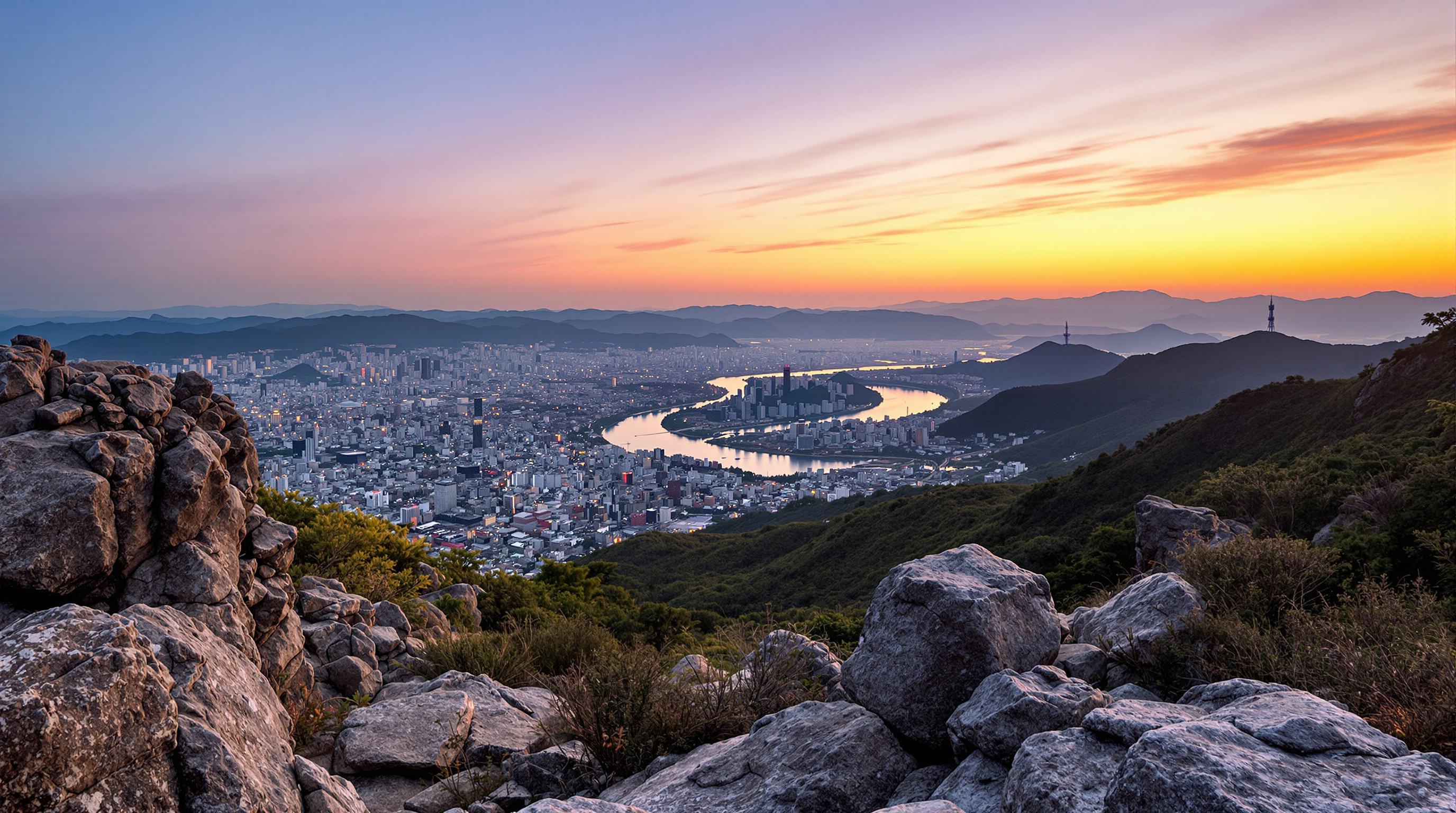
If you are coming to Seoul with a camera, this is the practical part — where to stand, when to go, how to get around, and how to photograph a crowded, private-minded city with respect. It gathers the loose ends of the whole journal into a plan.
When to come
Two seasons are unbeatable and both are short. Spring blossom runs roughly late March into April; autumn colour peaks late October into mid-November, and the autumn light is the best of the year. Summer is hot and wet but the monsoon gives extraordinary reflected light and glowing night markets; winter is cold, clear, and quiet, with thin silver light and the chance of snow on the palace roofs. Whatever the season, the hours that matter are the same: the first hour after sunrise and the golden-to-blue stretch at the end of the day. Plan the trip around the seasons and the days around the light.
Where to stand
A few kinds of vantage reliably deliver:
- The mountain ridges. Seoul is ringed and threaded by hikeable granite peaks, and from any of them the whole city and the Han River resolve at once — the definitive establishing shot, best at dusk.
- The hanok hill lanes. The traditional-house neighbourhoods above the old centre give you Seoul's signature old-and-new frame; go at dawn before the crowds.
- The riverside parks. For bridges, sunsets, weather, and unguarded city life along the water.
- The old markets and the palace grounds. For texture, ritual, hanbok colour, and shelter when the midday light is harsh.
- The southern towers. For cool architecture, scale, and repetition.
The official Seoul visitor service and the Korea Tourism Organization keep current details on opening hours, festivals, and access.
Getting around with a camera
The subway is the photographer's best friend — fast, cheap, comprehensive, and a subject in its own right (see underground Seoul). A rechargeable transit card pays for buses and trains alike and saves fumbling for fares while the light is good. Travel light: one camera, one or two lenses, spare batteries, a cloth for the rain, and comfortable shoes matter more than any accessory, because the city is walked.
The etiquette of photographing people
Korea is welcoming to photographers and serious about privacy, and the two facts are easy to hold together:
- Ask with the camera. Catch the eye, raise the camera a little; a nod or smile is yes, a turned back or raised hand is no. Honour the answer at once.
- Buy where you shoot. In markets and food stalls, a small purchase is the courtesy that makes you a guest rather than a tourist.
- Protect the vulnerable. Children, anyone in distress, and anyone who cannot consent are best not identifiable in the frame.
- Sacred and solemn spaces — temples, shrines, ceremonies — ask for a quiet camera and no flash. When in doubt, lower it.
- Delete cheerfully if asked. It costs nothing and it keeps the street open for the next photographer.
A note on kit and comfort
Seoul is a walking city, and the camera you will actually use is the light one. A single body with one versatile lens, a spare battery, and a cloth for the rain will out-photograph a heavy bag every day, because it goes with you up the hill and onto the last train without complaint. Dress for the season honestly — the summers are genuinely hot and wet, the winters genuinely cold — because a comfortable photographer stays out for the good light and a miserable one goes home before it. Public transit, water fountains, and convenience stores are everywhere, so you can travel light and resupply as you go. None of this is about gear for its own sake; it is about removing every small friction between you and the next frame, so that when the picture appears you are present, warm enough, and ready.
A parting method
The best guide to Seoul is the oldest one: carry the camera every day, walk more than you shoot, and let the city repeat until it starts to reveal itself. Read the craft, watch the light, and keep your own daily record — a single honest picture at a time is how anyone has ever come to know this city. When you are ready to wander, begin at the collections.