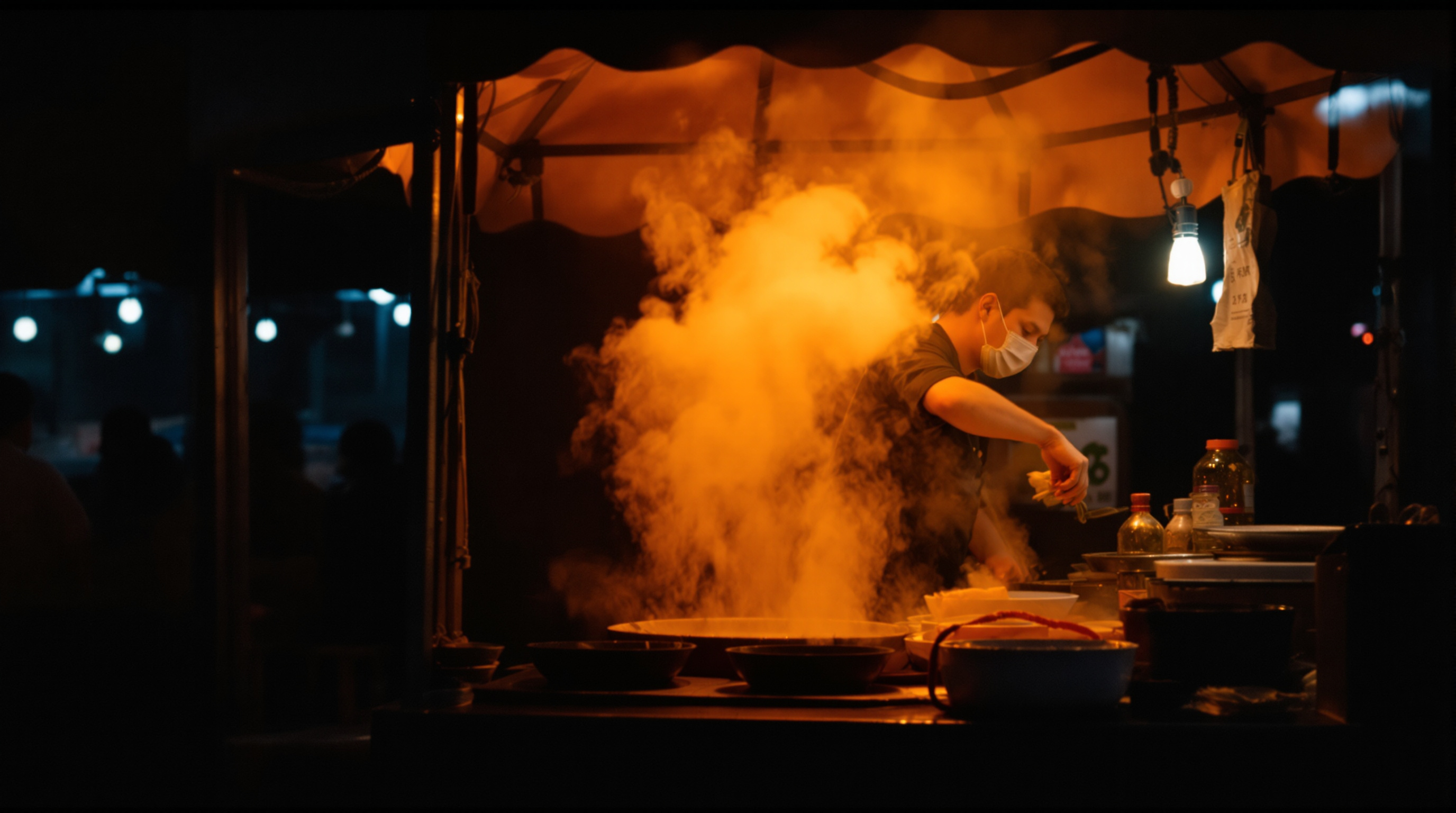
Nothing photographs the warmth of Seoul better than its street food. When the light goes and the tents light up, the city gathers around small pots of something hot — and the camera is welcome, if it behaves.
The pojangmacha — the orange-tented street stall — is the recurring set-piece of any Seoul night archive. Steam, a single bare bulb, a row of strangers on plastic stools, the cook's hands in constant motion: it is a lit stage on a dark street, and it rarely gives you a dull frame. Around it spread the covered market lanes and the food streets, each with its own colour and rhythm.
What the stalls sell
The menu is the calendar. In the cold months the tents run to skewered fishcake in hot broth, blood sausage, and grilled saury; summer brings mountains of shaved ice crowned with sweet red bean, and cold noodles. Year round there is the smell of grilling pork belly, the sweet-hot lacquer of glazed chicken, savoury pancakes crisping on a flat pan, and paper cups of soup handed across a counter. You do not need to name any of it to photograph it well — but knowing the season tells you what the picture is about.
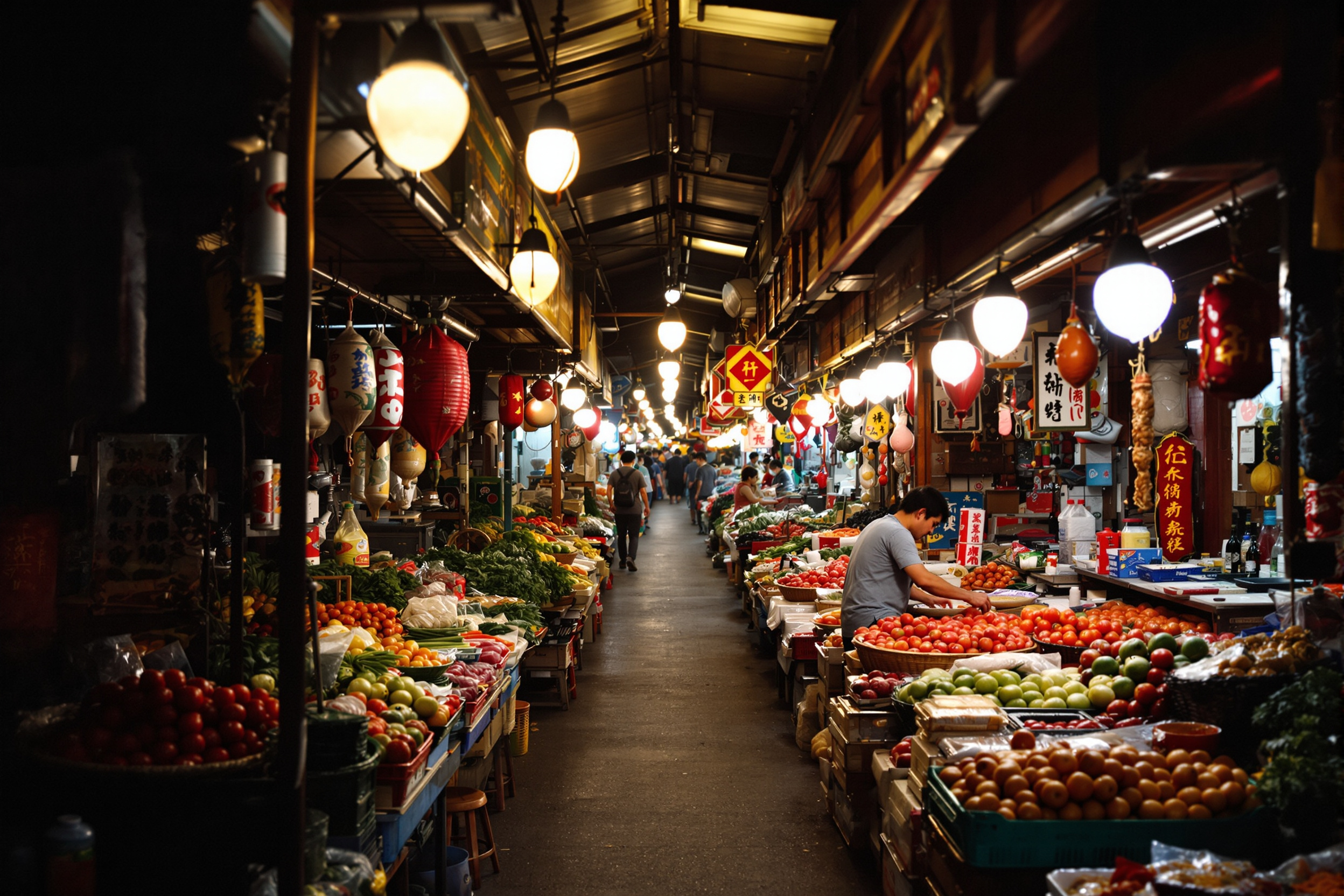
How to photograph food streets
The light is the gift and the problem. Tent bulbs and neon are warm, uneven, and bright enough to shoot by, which means a fast lens earns its place here more than anywhere. A few working habits:
- Expose for the highlights. Let the dark street go dark; protect the glow on faces, steam, and glaze. A silhouette against a lit tent is often the stronger picture.
- Find the steam. Steam catches light and reads as motion and warmth — position it between your subject and the brightest source.
- Shoot the hands. A cook's hands mid-work tell the whole story and rarely require a face, which keeps the picture kind.
- Get low and close, then wait. The best moment — a laugh, a pour, a handover — comes to those already framed and patient.
A word on manners
These are people's livelihoods and dinners, not a set. Buy something; it is the price of admission and it is small. Catch the cook's eye and lift the camera in question; a nod is a yes and a raised hand is a no, and both are worth honouring. Faces of strangers eating deserve discretion — many of the best street-food frames need no recognisable face at all. For the wider etiquette of photographing people in Korea, see the notes in the photographer's guide to Seoul.
Colour, and the case for black and white
Food streets are a riot of colour — orange tents, red signs, the glaze on a skewer, the green of a spring onion — and colour is usually the right choice here, because the warmth is the subject. But there is a strong case for black and white after dark, too. Strip the colour away and a food-tent picture becomes about light, steam, and gesture: the cook's arm, the rising vapour, the ring of faces around the glow. Monochrome forgives the ugly mixed lighting that colour struggles with under bulbs and neon, and it lends an everyday scene a documentary weight. Shoot both if you can and decide at the desk; the same frame can be a cheerful colour picture and a solemn black-and-white one, and the street will have given you both for free.
Where the night leads
Follow the food and you will find the old markets, the covered arcades that have fed the city for generations — the city's official visitor service keeps current listings of the major market districts. Follow the crowd home and you will end up underground, on the last train, which is a photograph of its own. Either way, the night market is where a Seoul daily photo tends to end — warm, a little blurred, and entirely alive.