Seoul keeps four distinct seasons, and each one hands the photographer a different city. The skyline barely changes; the light, the colour, and the mood change completely. Learning the year is the fastest way to learn the place.
A daily photo record makes the seasons impossible to ignore. Return to the same overpass, the same stream, the same market lane across twelve months and you build a set of near-identical frames that are nothing alike. The following is how the year tends to unfold for anyone photographing the capital.
Spring — blossom and haze
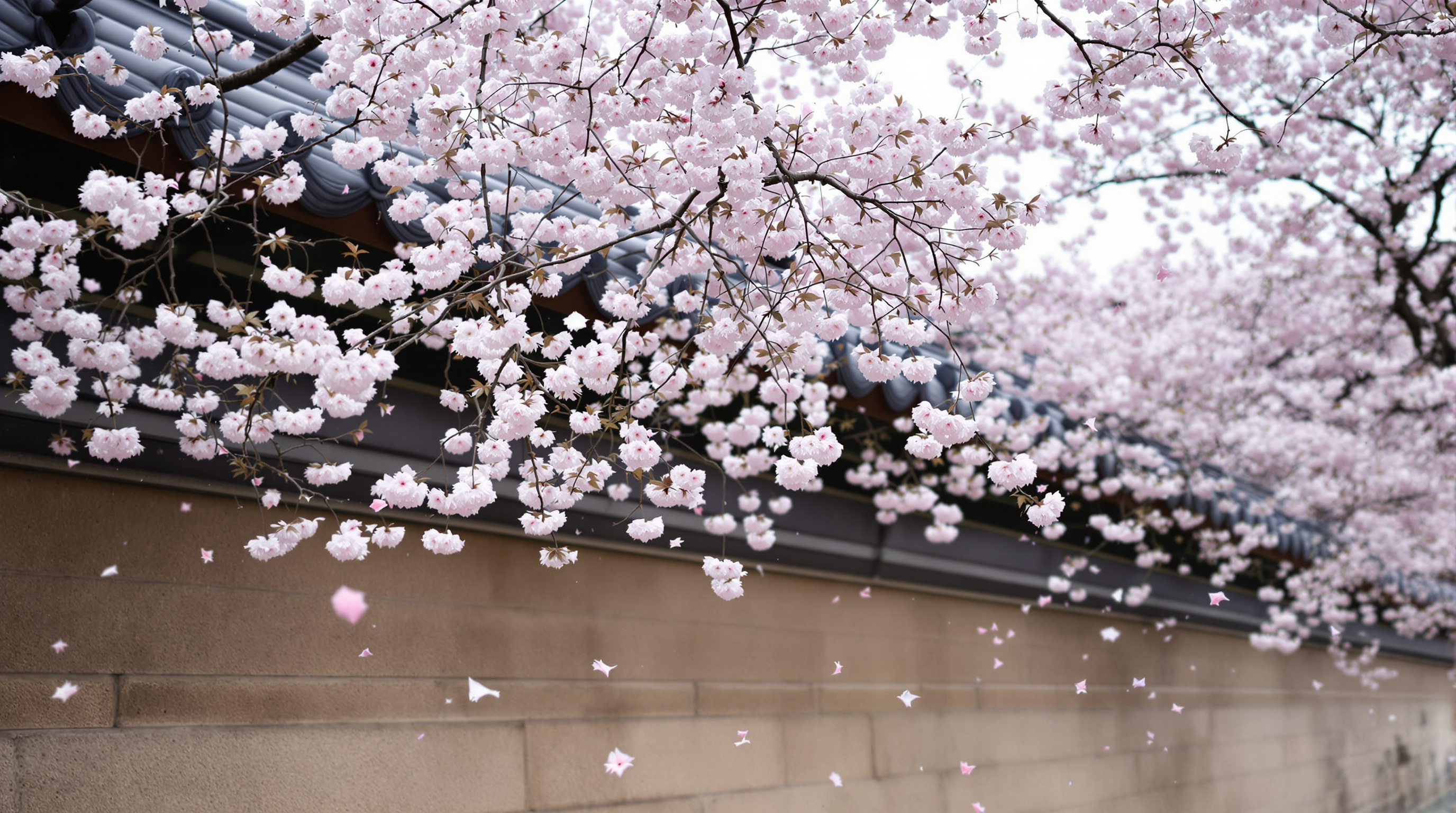
Spring arrives as colour. From late March into April, cherry and magnolia break along the streams, palace walls, and hillside paths, and for a fortnight the whole city softens. Blossom photography is a cliché for a reason, and the way past the cliché is people: a vendor beneath the canopy, a child reaching up, petals caught in the updraft of a passing bus. Spring also brings haze and, some years, dust carried on the wind — flat light that flatters portraits and mutes the distance into ink-wash layers. The Korea Tourism Organization publishes rough blossom forecasts each year; treat them as a loose guide, not a timetable.
Summer — monsoon and neon
By July the monsoon settles in — jangma, weeks of warm rain broken by fierce blue afternoons. This is the great secret season for photography. Wet asphalt turns every neon sign and tail light into a second picture; umbrellas add colour and geometry; the light after a downpour is clean and enormous. Carry a cloth and a lens hood, protect the camera, and shoot the reflections. Summer nights are when the street-food tents come into their own, glowing against the dark and the damp.
Autumn — the gold fortnight
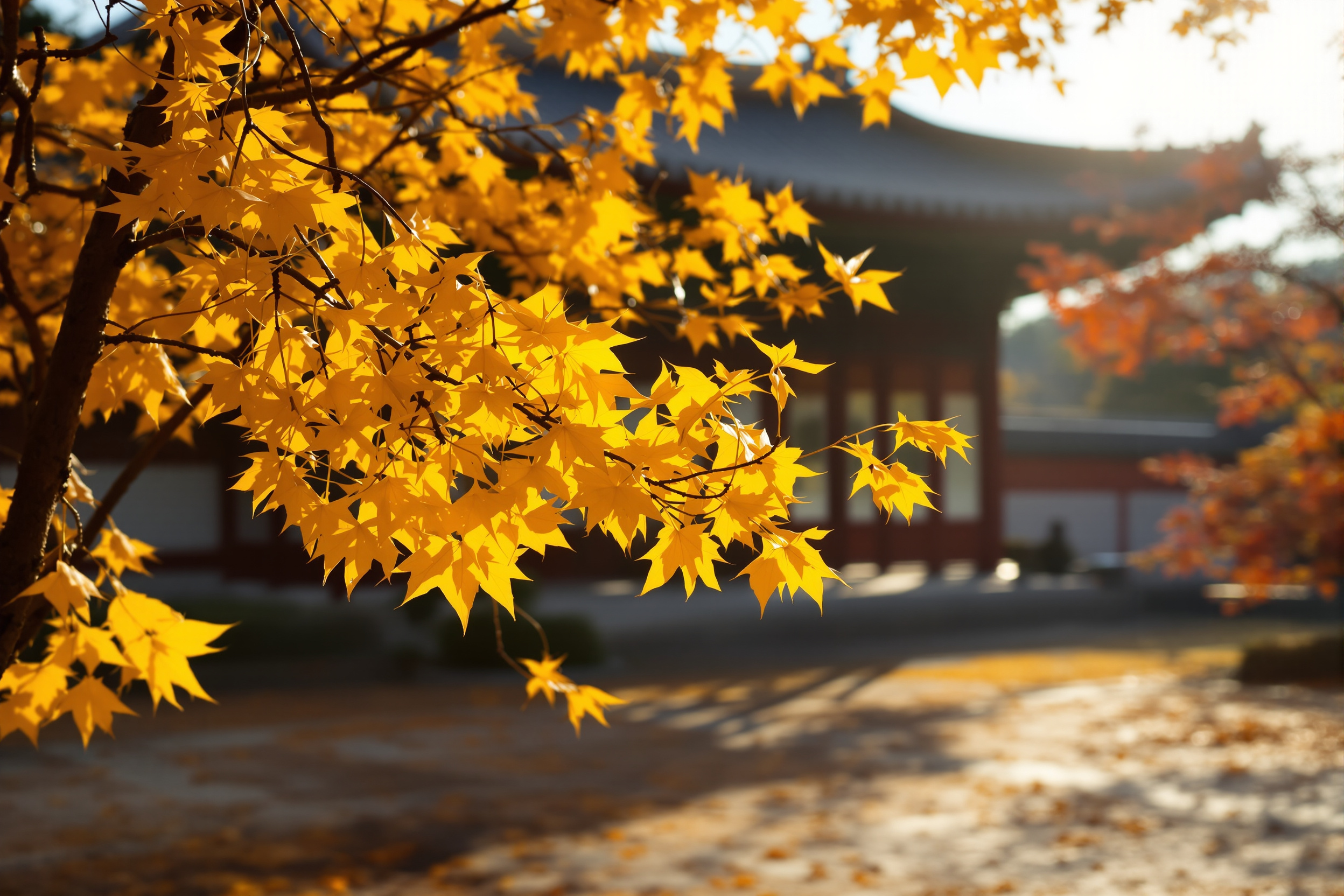
Autumn is Seoul at its most photogenic and its most crowded. Through late October and early November the ginkgo trees turn a violent yellow and the maples run red across the palace grounds and mountain temples. The light is long, low, and clean — the year's best. Autumn is also the season of clear distance: from a hilltop the city sharpens all the way to the ranges, and the Han River throws hard evening light back at the towers. Go early, because everyone else is coming too.
Winter — quiet and colour
Winter empties the frame. The cold is dry and sharp, the light thin and silver, and the city grows quiet in a way that suits the camera. Snow is not guaranteed, but when it comes it lands on curved temple roofs and hanok tiles and rewards anyone patient enough to be out early. Winter is also the season of the ritual calendar — the lanterns and colour of festival days, and the warm interiors that a cold street sends you looking for. A thermos and fingerless gloves do more for winter photography than any accessory.
The shoulder weeks
The calendar's best-kept secret is the shoulder weeks — the uncertain days between two seasons, when the light cannot decide and the crowds have not arrived. The bare fortnight before blossom, when the branches are black lace against a pale sky; the first cold snap of autumn before the leaves fully turn; the thaw at winter's end. These are unfashionable weeks, and they are wonderful to photograph precisely because no one else is trying to. The city is emptier, the light is strange and soft, and the pictures feel found rather than taken. A daily record catches these transitions by default, and they often age better than the postcard peaks. If you have the choice, come a week early or stay a week late.
Photographing the year
The lesson of a seasonal archive is that there is no bad season, only unprepared photography. Each quarter has its hour and its subject; the work is to know which is which and to be standing in the right light when it arrives. Next, see how those seasons play out street by street across Seoul's districts, or read the craft behind the frames in light and composition.