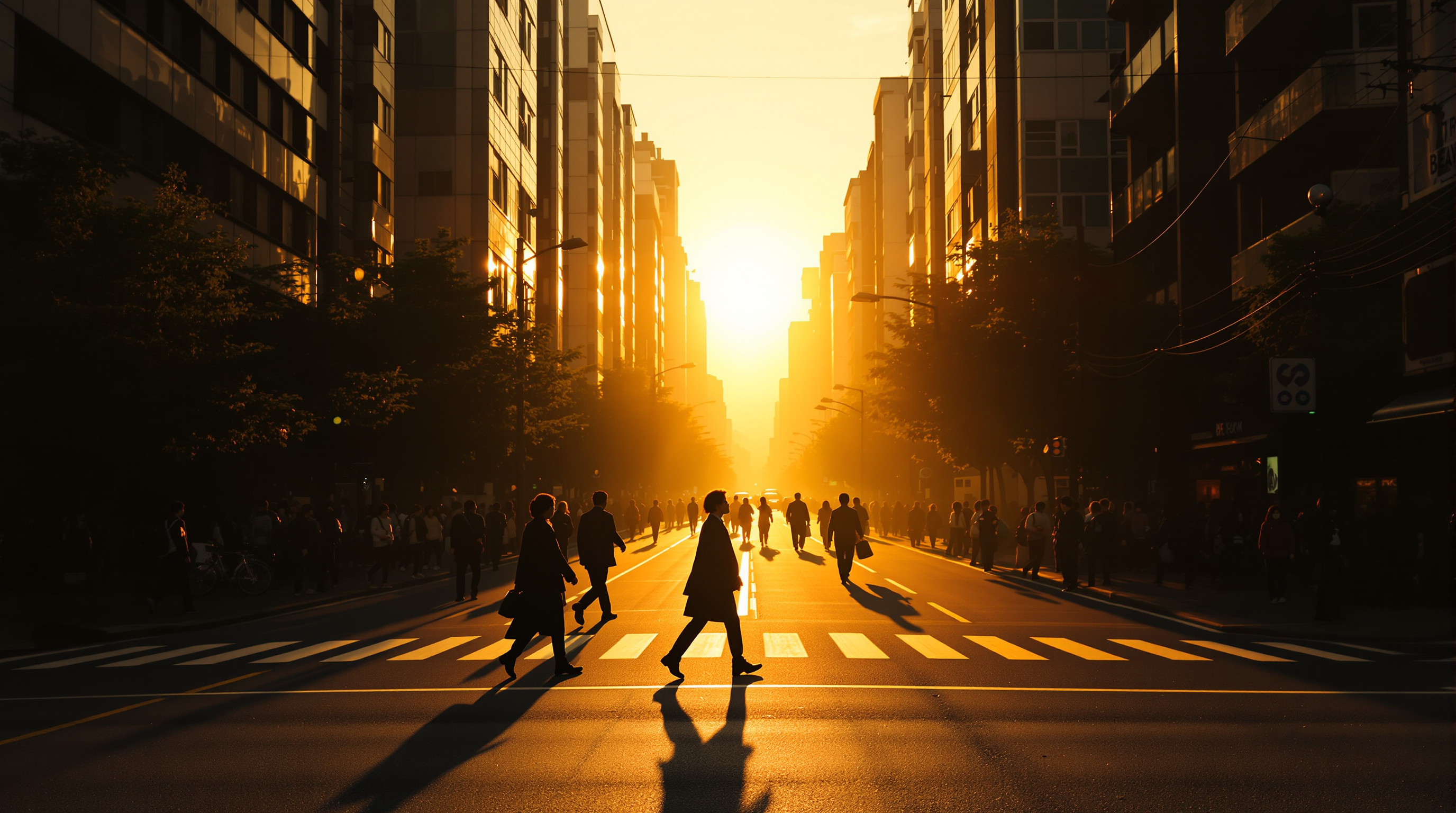
Every photograph is really two decisions — where the light is and where the edges are. Gear changes; those two decisions do not. This is the craft that a daily photograph of Seoul is built on, hour by hour and frame by frame.
Reading the light
Light is the photographer's only true subject; everything else is what the light happens to fall on. A city gives you a full day of it, each hour with its own character:
- Dawn and the blue hour — cool, quiet, and clean, with empty streets and the balance between sky and city lights that flatters any skyline.
- Morning — clear and directional, good for architecture and the hard geometry of the modern districts.
- Midday — the hard hour; overhead and unflattering, best spent in markets, arcades, and the subway where the light is even.
- The golden hour — long, warm, and forgiving, raking down the avenues and lighting faces from the side; the reliable hour for people and streets.
- Dusk and night — the city's own light takes over: neon, windows, tail-lights, and the wet shine of a rained-on street.
Bad weather is good light. Overcast is a giant softbox; rain doubles every light in the pavement; fog erases the clutter and leaves you shape and tone. The photographers who complain about the weather are usually the ones indoors when the best pictures happen.
Building the frame
Composition is the art of leaving things out. A strong frame is usually a simple one — a single clear subject, a background that supports rather than fights it, and edges that hold no accidents. A few working principles that travel well:
- Decide the subject, then remove everything else. If you cannot say in a word what the picture is about, keep editing with your feet.
- Use the city's lines. Streets, rails, bridges, and market aisles are ready-made leads into the frame — put your subject where they point.
- Mind the edges and the background. Most weak pictures fail at the border — a cropped limb, a pole growing from a head. Check the whole rectangle before you press.
- Layer for depth. Foreground, middle, distance — a near figure against a far skyline gives a flat city three dimensions.
- Frame within the frame. A gate, an alley mouth, a train window — Seoul is full of natural borders that concentrate the eye.
For the museum-grade history of how these ideas developed, the Metropolitan Museum's photography timeline is a rich, free resource.
Colour, tone, and restraint
A last decision sits underneath the other two: how much of the city's colour to include. Seoul is a loud palette — neon, signage, painted eaves, market produce — and the temptation is to keep all of it. Restraint usually wins. A frame built around one or two colours reads instantly; a frame with ten fights itself. Look for the single red umbrella in a grey street, the one warm window in a blue dusk, the block of hanbok colour against dark wood. The same logic governs tone: let the shadows go genuinely dark and the highlights stay clean, and the picture gains depth. The eye reads contrast and simplicity as intention, and clutter as accident — so the compositional work is very often the work of taking away, right up until the frame says only what you meant.
Gear serves the frame
The daily photo tradition was built on modest cameras carried everywhere, and that remains the whole secret. One camera and one lens you know completely will always beat a bag you have to think about. Set the exposure once for the light you are in, keep the thing at your side, and spend your attention on the light and the edges — the two decisions that were always the real work. Put this together with the field craft on the street photography page, and take it out into the seasons.